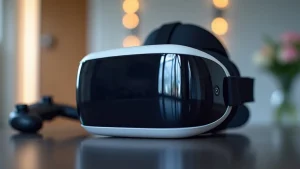
Remember that time you tried your friend’s VR headset and were completely blown away? Suddenly, you’re exploring alien planets, battling dragons, or building a dream home, all from the comfort of your living room. The experience is undeniably captivating, but before you rush to buy your own, one question pops into your head: how much is a VR headset with controllers? This post explores the various factors influencing the cost, helps you find the right fit for your budget, and gets you ready to explore the exciting possibilities that virtual reality offers. You’ll gain valuable insights into different headset types, features, and price points. By the end, you’ll be well-equipped to make an informed decision and enter the virtual world!
Key Takeaways
- Discover the different types of VR headsets and their associated price ranges.
- Learn about the key features that impact the cost of a VR headset.
- Explore the pricing variations between wired and wireless VR setups.
- Understand how the included controllers and accessories affect the overall cost.
- Get tips for finding the best deals and saving money on a VR headset.
- Find out what to consider when comparing different VR headset options.
The Cost of Virtual Reality: What Influences the Price?
The price tag on a VR headset with controllers varies significantly, influenced by numerous features and technology. From entry-level models to high-end, professional-grade systems, the price range is vast. Several factors contribute to the final cost, including the display resolution, refresh rate, tracking capabilities, and the inclusion of accessories like controllers and headphones. The brand name, build quality, and additional features such as built-in audio and eye-tracking also play a role in determining the price. Choosing the right VR headset involves balancing your desired features with your available budget. Examining these factors helps you make a better buying decision.
Display and Visual Fidelity: A Clear Picture
The display is one of the most important components affecting the price and user experience. Higher resolution displays deliver sharper images, reducing the “screen door effect,” where individual pixels are visible, especially in older VR headsets. A higher resolution provides a more immersive and realistic visual experience. The refresh rate, measured in Hertz (Hz), is another essential factor. A higher refresh rate, such as 90Hz or 120Hz, means the image updates more frequently, reducing motion sickness and creating a smoother, more fluid experience. Different display technologies, such as LCD or OLED, also impact the price. OLED displays offer richer colors and deeper blacks, contributing to a more immersive experience but often come at a premium.
- Resolution: Measured in pixels (e.g., 1920×1080 per eye). Higher resolution means sharper images.
- Refresh Rate: Measures how many times the image refreshes per second (e.g., 90Hz, 120Hz). Higher refresh rates reduce motion sickness.
- Display Technology: LCD and OLED are the most common. OLED offers superior color and contrast but usually costs more.
- Field of View: Wider fields of view create a more immersive experience.
Visual clarity and immersion are directly connected to the display quality. A higher resolution reduces the appearance of individual pixels, creating a sharper and more detailed image. The refresh rate determines how smoothly the images update, impacting the user’s perception of motion. These display characteristics can significantly elevate the price. The field of view, measured in degrees, determines how much of the virtual world you can see at once. A wider field of view provides a more natural and immersive experience.
Tracking Systems: How VR Headsets Know Where You Are
VR headsets use different tracking systems to determine the user’s position and movements in the virtual environment. These systems track the position of the headset and the controllers, allowing the user’s actions in the real world to be mirrored in the virtual world. The tracking system significantly affects the cost and quality of the VR experience. Some headsets use inside-out tracking, where cameras built into the headset track the user’s surroundings. Others use outside-in tracking, which involves external base stations or cameras placed in the room to track the headset and controllers. Different tracking technologies also vary in terms of accuracy, range, and ease of setup. This is another crucial aspect when deciding how much a VR headset with controllers is priced.
- Inside-Out Tracking: Cameras on the headset track the environment. Easier to set up.
- Outside-In Tracking: External base stations or cameras track the headset. Typically more accurate.
- Tracking Accuracy: Determines how precisely movements are replicated in VR.
- Tracking Volume: The area in which the headset and controllers can be tracked.
Inside-out tracking systems are generally simpler to set up, as they don’t require external sensors. They are ideal for users who prioritize ease of use and portability. Outside-in tracking systems, while sometimes more complex to set up, usually offer a higher degree of tracking accuracy and a larger tracking volume, which is essential for certain types of games and applications. For example, a VR experience that requires you to walk around a larger space requires a more robust and expansive tracking system.
Controllers and Accessories: What Comes in the Box?
VR headsets almost always include controllers, which are essential for interacting with the virtual environment. These controllers typically feature buttons, joysticks, and sometimes even touch-sensitive surfaces for precise control. The design and features of the controllers significantly influence the price. Haptic feedback, which provides physical sensations, adds to the immersion and realism but also increases the cost. Additional accessories, such as headphones, face cushions, and carrying cases, can further increase the total cost. Understanding what accessories are included helps you compare different VR headset packages.
- Controller Type: Different controllers offer different features and ergonomics.
- Haptic Feedback: Provides physical sensations for a more immersive experience.
- Tracking: Controller tracking accuracy mirrors that of the headset.
- Included Accessories: Headphones, face cushions, and carrying cases can add value.
The type of controllers and the features they offer play a major role in the overall cost. High-end controllers with advanced haptic feedback and precise tracking tend to be more expensive. In addition, the quality of included accessories can influence the value proposition. Some headsets come with high-quality headphones, while others require you to supply your own. All of this is something to consider when you are asking yourself about the total expense of a VR headset with controllers.
Wired vs. Wireless VR: Which Is Right for You?
The choice between wired and wireless VR significantly affects the price and user experience. Wired VR headsets connect to a computer or console via a cable, which transmits the video and audio signals. Wireless VR headsets eliminate the cable, providing greater freedom of movement. Each option has its advantages and disadvantages. Wired headsets typically offer a more affordable entry point and can deliver higher visual fidelity due to the direct connection. Wireless headsets provide a more immersive and untethered experience, but they often cost more and may have some performance limitations.
Wired VR Headsets: A Budget-Friendly Entry Point
Wired VR headsets often represent a more accessible option for many people. They typically cost less than their wireless counterparts, as they don’t need to incorporate expensive wireless components. The direct connection to the PC or console ensures a stable and reliable signal, minimizing latency and maximizing visual quality. The reliance on a cable can limit movement, but many users find this trade-off acceptable, especially for seated VR experiences. The cable also provides power to the headset. Many of the most powerful PC-based VR headsets are wired. The lower price and high performance of wired headsets make them a popular choice for both beginners and experienced VR users.
- Lower Cost: Usually more affordable than wireless options.
- Higher Visual Fidelity: Direct connection provides a stable signal.
- Stable Performance: Less susceptible to wireless interference.
- Limited Movement: Cable can restrict freedom of movement.
One of the biggest advantages of wired headsets is their more affordable price. The lack of wireless components helps to keep the cost down, making them accessible to a wider audience. The direct connection allows for high visual fidelity, as there is no need to compress the video signal for transmission. The stable connection also minimizes latency, which ensures a smooth and responsive experience. The main disadvantage is the tether, which can restrict movement and potentially create a tripping hazard.
Wireless VR Headsets: Freedom to Explore
Wireless VR headsets offer a more immersive and unrestricted experience. They allow you to move freely in the virtual world without being tethered to a cable, which greatly enhances the feeling of presence. This freedom is especially appealing for active VR games and experiences that require you to move around a large space. Wireless headsets typically use Wi-Fi or proprietary wireless technologies to transmit the video and audio signals from the computer or console to the headset. While wireless headsets provide a significant upgrade in terms of freedom, they typically come at a higher cost. They also rely on a battery, which needs to be charged regularly.
- Greater Freedom: No cable restrictions.
- Immersive Experience: Enhances the feeling of presence.
- Higher Cost: Wireless technology adds to the price.
- Battery Life: Requires charging.
The freedom offered by wireless VR is a significant advantage, allowing you to move around without being tethered. This is especially beneficial for games and applications that involve physical movement. The improved immersion contributes to a more engaging experience. The higher cost is due to the integration of wireless components, including a battery, a wireless transmitter, and a display. Battery life and potential wireless interference are other considerations, depending on the headset and your environment.
Price Breakdown: What Can You Expect to Pay?
The cost of a VR headset varies widely depending on the features, brand, and type. Entry-level VR headsets, which typically offer basic features and are designed for casual use, can start around $300-$400. Mid-range headsets, which provide a more advanced experience with better resolution, tracking, and features, usually range from $500 to $800. High-end headsets, designed for professional use or gamers seeking the absolute best performance, can cost $800 or more. The inclusion of controllers and other accessories affects the price significantly. Wireless headsets and those with advanced features will be at the higher end of the price spectrum. These ranges are estimates, and prices can change depending on sales and new releases. Knowing how much is a VR headset with controllers can help to narrow down the choices.
Entry-Level VR Headsets: Getting Started
Entry-level VR headsets are great for first-time users or those wanting a more budget-friendly experience. They usually provide a basic VR experience with decent resolution and tracking. These headsets typically lack advanced features such as eye-tracking or advanced haptic feedback in the controllers. They may use inside-out tracking, which is easier to set up but can sometimes be less accurate than outside-in tracking. These headsets are often a good choice if you’re not sure how much you’ll use VR or have limited resources. Although the visual fidelity might not be as stunning as on more expensive models, they still provide an excellent introduction to virtual reality.
- Price Range: Approximately $300-$400.
- Features: Basic resolution, inside-out tracking.
- Best For: Casual users, those on a budget, and newcomers.
- Limitations: Fewer advanced features, lower overall performance.
Entry-level VR headsets offer a cost-effective way to get into VR. They allow you to explore a variety of virtual reality content without a significant financial investment. The typical features include decent resolution, sufficient for an immersive experience, and inside-out tracking, which makes setup simple. However, they may lack the high-end features found in more expensive models. The lower price makes them accessible to a wider audience, and the ease of use makes them a great choice for beginners.
Consider this example: if you find yourself at a friend’s place and they are playing a VR game that you enjoy, the entry-level options may be your best bet to start experiencing VR without too much investment.
Mid-Range VR Headsets: A Balanced Experience
Mid-range VR headsets provide a better balance between price and performance. They typically offer improved resolution, refresh rates, and tracking capabilities compared to entry-level models. These headsets may include features like higher-quality built-in audio, more advanced controllers with better haptic feedback, and improved ergonomic design. Mid-range headsets are a great option for users who want a more immersive experience without paying the premium price of high-end models. They often strike a good balance, making them popular for both gamers and those using VR for professional applications. A mid-range headset is what most users prefer when they’re deciding how much is a VR headset with controllers.
- Price Range: Approximately $500-$800.
- Features: Improved resolution, refresh rates, and tracking.
- Best For: Gamers and professionals seeking a quality experience.
- Advantages: Balanced performance and features.
Mid-range headsets give a more compelling VR experience, with improved visuals, more responsive tracking, and better overall immersion. The increased resolution and higher refresh rates contribute to a sharper and smoother visual experience, reducing motion sickness. The improved tracking provides greater precision, allowing for more natural interactions in the virtual world. The improved controllers, often with better haptic feedback, contribute to a more engaging experience. The price point is often more accessible than the high-end options, making mid-range headsets a popular choice for serious VR users.
High-End VR Headsets: The Ultimate Experience
High-end VR headsets offer the best possible performance and features. These headsets are designed for those who seek the highest visual fidelity, most accurate tracking, and most advanced features, pushing the boundaries of what is possible in VR. They typically offer high-resolution displays, fast refresh rates, and advanced tracking systems such as outside-in tracking. They often include advanced controllers with sophisticated haptic feedback, built-in audio, and premium build quality. These headsets also may include features like eye-tracking, which allows the VR system to follow the user’s gaze for a more natural and immersive experience. High-end VR headsets are usually targeted at enthusiasts, professionals, or those seeking the best possible VR experience, regardless of cost. The answer to how much is a VR headset with controllers when we’re talking high-end models is more than the average cost.
- Price Range: $800 and up.
- Features: High-resolution displays, advanced tracking, eye-tracking.
- Best For: Enthusiasts and professionals.
- Benefits: The best possible performance and features.
High-end VR headsets provide an unmatched VR experience. The high-resolution displays deliver incredibly sharp images, providing stunning visual detail. The fast refresh rates minimize motion sickness, creating a smooth and fluid experience. Advanced tracking systems provide precise and reliable tracking, and the sophisticated controllers offer exceptional haptic feedback. These headsets may offer features like eye-tracking and premium design. The high price tag reflects the advanced technology and superior performance.
Tips for Saving Money on a VR Headset
Buying a VR headset can be a significant investment, but there are ways to save money. One way is to look for sales and discounts, especially during holidays or major shopping events. You can also explore refurbished models, which have been returned to the manufacturer and restored to like-new condition. These often come at a reduced price and can be a great way to save money without sacrificing quality. Another strategy is to consider older models that are still capable, as these may offer excellent value for the money. You might also want to look at bundles that include games or accessories, which could offer better value than buying individual components. Another option is to look for models that are open-box or lightly used, which can provide savings.
- Watch for Sales: Look for discounts during holidays.
- Consider Refurbished Models: May offer significant savings.
- Explore Older Models: Great value for your money.
- Look for Bundles: Includes games or accessories.
Monitoring sales and promotions can help you find a VR headset at a reduced price. These opportunities are often available during major shopping events like Black Friday, Cyber Monday, or other holiday sales. Refurbished models, which have been inspected and restored by the manufacturer, can offer significant savings. Explore older models, which may have excellent features at a lower price than the newest models. If you’re looking for extra value, look for bundles that include the headset, controllers, and games, potentially saving you money compared to buying each item separately. Looking for open-box or lightly used models also can help to reduce expenses when deciding how much is a VR headset with controllers.
- Set a Budget: Determine how much you can spend.
- Research: Compare different headsets and features.
- Read Reviews: Check user reviews before buying.
- Check for Sales: Look for discounts during holidays.
- Consider Refurbished Models: May offer significant savings.
By following these strategies, you can minimize the cost of a VR headset while still enjoying an amazing virtual reality experience.
Common Myths Debunked
Myth 1: VR is only for gaming.
In reality, VR has many applications beyond gaming, including virtual tourism, education, training simulations, and social interaction. Many professionals are beginning to leverage VR technology.
Myth 2: VR gives everyone motion sickness.
Although some users experience motion sickness, improvements in VR technology, such as higher refresh rates and better tracking, have significantly reduced this issue. Not everyone experiences motion sickness, and it can depend on the individual and the content.
Myth 3: VR headsets are all the same.
VR headsets vary greatly in terms of features, resolution, tracking, and price. Some are designed for casual use, while others offer advanced features for professional applications.
Myth 4: You need an expensive computer for VR.
While some high-end VR headsets require powerful PCs, many standalone and entry-level headsets work without the need for an external computer. Some headsets are designed to work with consoles, extending the compatibility of VR.
Myth 5: VR is isolating.
While VR is a solitary experience, many VR applications and games are designed for social interaction. You can play games or participate in activities with friends and even strangers. The feeling of being “alone” is not always true for those exploring VR.
Frequently Asked Questions
Question: Do I need a powerful computer to use a VR headset?
Answer: It depends on the headset. Some headsets are standalone and don’t need a computer. Others, particularly high-end models, require a gaming PC.
Question: Are VR headsets comfortable to wear for extended periods?
Answer: Comfort varies depending on the headset design. Many models have adjustable straps and padding. Try them on if possible.
Question: What’s the difference between inside-out and outside-in tracking?
Answer: Inside-out tracking uses cameras on the headset. Outside-in tracking uses external sensors in the room.
Question: What is haptic feedback?
Answer: Haptic feedback provides physical sensations in the controllers, enhancing the realism of the experience.
Question: Can I use VR with glasses?
Answer: Many VR headsets are designed to accommodate glasses, but it varies. Check the specifications for compatibility.
Final Thoughts
Knowing how much is a VR headset with controllers is key to starting your adventure in virtual reality. The price range is wide, shaped by factors such as display resolution, refresh rate, and tracking systems. Wired headsets often provide a lower price point, while wireless models offer freedom of movement but may cost more. Entry-level models provide an affordable way to begin, while mid-range and high-end options offer improved performance and features. Saving money is possible by exploring sales, refurbished models, and older models. The right VR headset is one that matches your needs and your budget. By exploring the features, considering your usage, and exploring price points, you can make the right choice and start exploring the exciting world of VR.