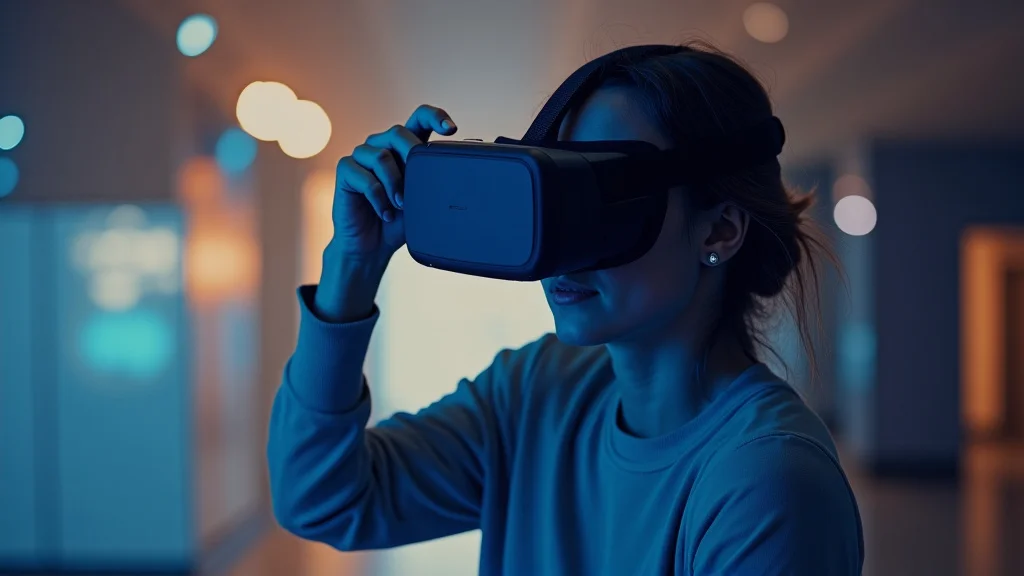
Remember that time you tried to catch a virtual ball and flailed around in your living room, nearly knocking over a lamp? We’ve all been there! The fascination with virtual reality is strong, but finding the right setup can feel like another level. This guide explores the world of VR headset with controllers, helping you make informed decisions and transform your entertainment. You’ll gain a deeper appreciation for the technology and how it can provide immersive experiences. By the end, you will be able to make a purchase decision that is right for you, increasing your enjoyment of VR!
Key Takeaways
- Discover the essential components and functions of a VR headset with controllers.
- Learn about various types and technologies employed in VR headsets.
- Explore the significant benefits that VR controllers bring to the gaming experience.
- Examine key features, such as display quality, tracking systems, and comfort level.
- Compare the pros and cons of different VR headset models available on the market.
- Get practical advice on setting up and maintaining your VR headset and controllers.
Unveiling the Essentials of VR Headsets With Controllers
The core concept of a VR headset with controllers revolves around delivering immersive experiences through realistic visuals, sound, and interaction. These devices transport users to another place, letting them see, hear, and interact with a generated world. This technology creates a sensory experience that blurs the line between the physical and digital, offering unique entertainment. The evolution of VR has led to various technologies and enhancements that improve the overall experience.
Core Components of a VR Headset
VR headsets depend on a combination of different parts to provide immersion. These parts work together to create the experience. When you explore the world of VR, becoming acquainted with these components is helpful, so let’s explore them:
- Displays: The displays are the visual center, usually two small screens, one for each eye. They render images that create a 3D effect. Resolution, refresh rate, and field of view are crucial for picture quality. Higher resolutions provide sharper images, while higher refresh rates reduce motion sickness. A wider field of view provides a more immersive sensation by filling more of your vision.
- Lenses: Lenses sit between the displays and your eyes. They magnify the images and focus them, creating a wider field of view and reducing distortion. The quality of the lenses is a key factor in visual clarity and comfort during extended use. Different lens designs can also influence the overall experience.
- Tracking System: A tracking system is responsible for monitoring the headset’s and controllers’ positions and movements in the real world. This data is essential for accurate interactions within the virtual environment, letting the virtual world adapt to your actions in the physical world.
- Audio: Integrated or external headphones deliver sound, creating an audio experience in the virtual world. Spatial audio, where sound appears to come from different directions, increases immersion. Good audio is essential for creating a realistic and immersive experience.
- Connectivity: Modern VR headsets use different connectivity methods. Some connect to a gaming PC via cables, providing high-fidelity graphics. Others are wireless, offering freedom of movement. Some headsets are completely standalone, incorporating all components within the headset.
Displays in VR headsets are very important, as they directly impact how you see the virtual world. The clarity, the colors, and the speed at which images refresh all contribute to an immersive and comfortable experience. Modern headsets utilize various display technologies, like OLED or LCD, to enhance visual performance.
Lenses are essential for the virtual experience. They take the images from the displays and make them easier to see, helping to focus the virtual world. When considering a headset, examining the lens quality is a must to make sure you have the best experience.
Tracking systems are the eyes and ears of your VR experience. They track your head and hand movements, allowing you to interact with the environment. There are different types of tracking systems, each with unique advantages. Understanding how they work can greatly affect your VR experience.
Audio in VR makes the experience feel alive. It lets you hear sounds from different places in the virtual world. High-quality audio is essential for making you feel as though you’re truly in the game.
Connectivity determines how you connect your VR headset. Different connectivity options have their own advantages, from high-fidelity graphics to more freedom. Your decision on how to connect your VR headset often influences your overall experience.
The Role of Controllers in Virtual Reality
Controllers enhance the experience of VR beyond mere viewing. They enable the user to interact with the virtual world by acting as virtual hands. The ability to manipulate objects, interact with the environment, and navigate menus is essential for immersion.
- Input Devices: Controllers act as the primary input devices, translating your physical movements into the virtual world. They often feature buttons, thumbsticks, and touchpads that allow for intricate control. The design and layout of these controls are key to comfortable and intuitive interaction.
- Tracking Technology: VR controllers incorporate tracking technology that allows the headset to monitor their location. This tracking might involve sensors, cameras, or external base stations. Precise tracking is critical for accurate hand and object interaction.
- Haptic Feedback: Advanced VR controllers provide haptic feedback, creating a sense of touch within the virtual world. Vibrations and other forms of feedback make interactions with objects more realistic. This feature improves immersion and realism.
- Ergonomics: Comfortable controller design is crucial for long VR sessions. Considerations include weight, grip, button placement, and the overall feel. Ergonomic controllers reduce fatigue and improve user enjoyment.
Controllers are essential in VR, letting you interact with the digital world. They translate your actions into movements in the VR environment. You’ll want to choose a comfortable and easy-to-use controller, as it will be your main tool for interacting with the VR world.
The tracking technology in the controller tells the VR system where your hands are in the virtual space. Precise tracking ensures your actions in the real world have accurate results in the virtual environment. Better tracking enhances the feeling of presence and immersion.
Haptic feedback lets you feel things in the virtual world. The controller vibrates or provides other forms of feedback when you interact with objects. This sense of touch improves the feeling of presence. It adds a whole new dimension to your VR experiences.
The design of your VR controllers has a big influence on your experience. A good controller should be comfortable to hold, with buttons within easy reach. The weight and grip should also be well-designed to make the experience more enjoyable.
Exploring Different VR Headset Technologies
The VR field is evolving, and different technologies exist in headsets. Understanding the specific technologies in VR devices helps consumers choose what suits their needs. These advances focus on visual fidelity, comfort, and interactive experiences.
Types of VR Headsets
There are different types of VR headsets on the market, each with unique features and specifications.
- PC VR Headsets: These headsets connect to a high-powered gaming PC to handle graphics and processing. They offer high-end visuals, low latency, and access to a wide range of VR content. You need a powerful PC to power them.
- Standalone VR Headsets: These are self-contained devices, with all the necessary hardware integrated into the headset. They don’t require a PC or external console. This makes them easy to set up and use. The power and performance are somewhat limited.
- Console VR Headsets: These headsets are designed to be used with a specific gaming console, such as PlayStation VR. They combine the ease of use of standalone headsets with the power of a dedicated gaming system.
- Mobile VR Headsets: These use smartphones as the display and processing unit. They offer an entry-level VR experience at a low cost. The quality is inferior to PC-based or standalone headsets.
PC VR headsets provide the highest-fidelity graphics and performance. They connect to a gaming PC that handles the graphics processing. These are perfect for those who want the best possible visuals and performance in their VR experiences.
Standalone VR headsets offer the ultimate in convenience. They include everything you need right in the headset. You can set them up anywhere, and they are excellent for beginners. Their processing capabilities are somewhat less than those of PC-based headsets.
Console VR headsets work with consoles like the PlayStation. They offer an excellent balance between ease of use and performance. The main advantage is that they are well-optimized for the console they’re made for.
Mobile VR headsets offer an inexpensive entry into VR, using your smartphone as the display. They are an accessible way to experience VR, but the overall quality is lower than other options.
Tracking Systems in VR
The tracking system is central to how VR headsets function. Accurate tracking is critical for creating an immersive experience. The tracking method directly influences the user experience by determining how well actions translate into the virtual world.
- Inside-Out Tracking: This system uses cameras within the headset to track the user’s movements and position. It’s user-friendly, as it doesn’t require external sensors. However, it can have issues in dimly lit environments.
- Outside-In Tracking: This system uses external base stations or sensors placed around the play area to track the headset and controllers. It offers highly precise tracking and is suitable for detailed interactions. Setup may be more complex.
- Hybrid Tracking: Hybrid systems combine inside-out and outside-in tracking technologies. This provides accuracy with room-scale tracking while minimizing setup complexity. The result is a balance between convenience and precision.
- Positional Tracking: This technology tracks the headset’s position in three-dimensional space, providing a natural sense of movement within the virtual environment. This is essential for preventing motion sickness. Positional tracking helps create a realistic sense of presence.
Inside-out tracking uses cameras on the headset to track your position in a room. This type of tracking is convenient because it doesn’t need external hardware. It’s a great option for people who want a simple, portable VR experience.
Outside-in tracking systems use external base stations to precisely track the movement of your headset and controllers. This often provides the best possible tracking accuracy, which is great for serious gamers or professional applications. Setting it up can be somewhat more complex.
Hybrid tracking combines the best of both worlds. It uses a combination of internal and external sensors for a good balance of accuracy and ease of use. This can provide an effective VR experience that is easy to set up.
Positional tracking follows your head’s position in all directions, allowing you to move naturally in the virtual world. This enhances immersion and contributes to a more realistic experience. Good positional tracking reduces the likelihood of motion sickness.
Advantages of VR Controllers in Gaming
Controllers enhance the VR experience in gaming by providing a direct way to interact with virtual environments. They enable a new level of realism, from hand movements to precise object manipulation, greatly improving overall user engagement.
Enhanced Immersion
VR controllers increase the sense of presence in virtual environments. They allow for intuitive interaction with the digital world. The user feels more connected to the game when they have direct control over their virtual hands. The ability to grab, manipulate, and explore virtual objects adds to the immersion.
- Natural Interaction: Controllers enable users to physically interact with virtual objects. This increases engagement, letting users grasp and use items intuitively. This makes the experience more immediate and authentic.
- Realistic Gameplay: Controllers offer more realistic gameplay mechanics. Players can perform a wider range of actions, like drawing, shooting, or playing musical instruments. The result is a more realistic and enjoyable gaming experience.
- Sensory Feedback: Haptic feedback from controllers increases immersion by providing physical sensations. Vibrations and other forms of tactile feedback make interactions feel real. This reinforces the realism of the virtual world.
VR controllers make the gameplay feel natural and intuitive. You can grab virtual objects with your hands. You can use tools as you would in the real world. This type of interaction is a major feature of VR.
VR controllers permit a wide range of actions. You can draw, shoot weapons, or play musical instruments in a virtual setting. This increased interactivity improves your enjoyment.
Controllers with haptic feedback provide physical sensations, making the virtual world feel more real. This added level of interactivity is a key part of the immersive experience.
Improved Gameplay
Controllers change the way games are played in VR. They enable more complex control schemes. This leads to more engaging and interactive gaming experiences. This increases the potential for innovative gameplay mechanics.
- Precision and Control: Controllers provide precise control over actions within the game. Users can target objects with greater accuracy and perform complicated maneuvers. This level of control opens up new gaming possibilities.
- Intuitive Controls: Controller designs emphasize intuitive controls, so it is easier for players to pick up and play games. The user doesn’t need to learn complex control schemes. This leads to a more immediate and enjoyable gaming experience.
- Unique Gameplay Mechanics: Controllers facilitate unique gameplay mechanics that are impossible with traditional controllers. Users can experience new ways of interacting with games, from wielding weapons to conducting virtual orchestras.
With VR controllers, you get precise control in the game. This means better accuracy when aiming and performing difficult actions. This increases the gameplay.
Controllers are designed for easy use, letting players begin easily. The controls are intuitive, so you can pick up a game without having to learn complex controls.
Controllers help create unique and interactive gameplay experiences. They provide tools that are impossible with traditional controllers. This can be as simple as wielding a weapon or as intricate as conducting an orchestra.
Social Interaction and Entertainment
VR controllers facilitate social interaction within games and applications. Users can share experiences, connect with others, and communicate more effectively in virtual environments. This enhances the sense of community in VR gaming.
- Multiplayer Experiences: VR controllers enable engaging multiplayer gaming experiences. Users can interact with other players in a shared virtual space, fostering social interaction. This adds to the enjoyment and community aspect of VR.
- Shared Experiences: Users can share the VR experience with others, such as watching gameplay or creating interactive content. This allows a broader audience to participate in VR entertainment.
- Virtual Communication: Controllers enable more natural and immersive communication. Users can use gestures, hand movements, and facial expressions to express themselves in virtual environments. This enhances social interactions in VR.
VR controllers allow for multiplayer games. You can interact with other players, improving the sense of community.
You can share the VR experience with others. For example, you can show others gameplay or create interactive content. This allows more people to participate in the VR experience.
Controllers enhance communication in VR. You can use hand movements and facial expressions to express yourself. This increases social interaction in VR.
Choosing the Right VR Headset With Controllers
Selecting the right VR setup involves careful consideration of the specific needs, preferences, and budget. Key features to keep in mind include display resolution, tracking accuracy, comfort, and the available library of games and applications. These are important for an optimal user experience.
Display Quality and Resolution
Display quality is critical to the visual experience. The resolution, refresh rate, and field of view affect the visual fidelity and immersion of VR. High resolutions give sharper images, improving realism. Higher refresh rates reduce motion sickness, while a wider field of view provides a more immersive experience.
- Resolution: The resolution affects the image clarity and detail in the virtual environment. Higher resolutions, such as 2K or 4K per eye, provide sharper and more detailed visuals, reducing the screen-door effect. This helps to make the experience more immersive and enjoyable.
- Refresh Rate: The refresh rate indicates how many times the image refreshes per second. Higher refresh rates, such as 90Hz or 120Hz, reduce motion sickness and create a smoother experience. The refresh rate is crucial for comfortable extended use.
- Field of View: The field of view refers to how much of the virtual world is visible. A wider field of view enhances the feeling of presence and immersion. A wider field of view provides a more natural and complete view of the virtual environment.
The resolution is how much detail you can see in the virtual world. Higher resolutions give you clearer and more detailed images, making it more immersive. Consider the resolution when you select a VR headset.
The refresh rate is the rate at which the images on the screen are updated. Higher refresh rates reduce motion sickness and offer a smoother experience. It is important to know this detail when selecting a VR headset.
The field of view is how much of the virtual world you can see at one time. A wider field of view provides a more immersive experience by giving you a larger view of your virtual surroundings.
Tracking Systems and Accuracy
The accuracy and reliability of the tracking system are important for an immersive experience. Precision in tracking determines how naturally the user interacts with the virtual environment. Different tracking methods have advantages and disadvantages concerning setup and accuracy.
- Tracking Technology: The tracking system is how your movements are translated into the virtual world. Different systems use different technologies, such as inside-out or outside-in tracking. You’ll want to pick a tracking system that matches your needs and the type of games you wish to play.
- Accuracy: High tracking accuracy is critical for avoiding input lag and creating an immersive experience. Precise tracking is essential for activities where detailed hand movements are involved. A good tracking system reduces motion sickness and enhances user enjoyment.
- Latency: Low latency, or the time it takes for your movements to be displayed in the virtual world, is essential for a smooth experience. Low latency prevents motion sickness and improves response times. You should prioritize VR headsets with minimal latency.
The tracking system determines how the VR headset knows where you are. Some use cameras inside the headset, while others use external sensors. You should choose a system that meets your performance needs.
The accuracy of the tracking is how precisely your movements are reflected in the virtual world. Accurate tracking reduces input lag and improves immersion. High accuracy is essential for a good experience.
Latency is the delay between your movements and what you see. Low latency is essential to avoid motion sickness and allow you to react quickly. A headset with low latency will greatly improve your experience.
Comfort and Ergonomics
Comfort plays a key part in the extended use of VR. The design of the headset and controllers must support long gaming sessions. Ergonomics includes considerations such as weight distribution, adjustable straps, and the overall feel of the device.
- Weight and Balance: A well-balanced design prevents strain and discomfort. Proper weight distribution can make extended use more comfortable. Lighter headsets usually contribute to more extended use.
- Adjustability: Adjustable straps and headrests are essential for a comfortable and customized fit. Adjustable features can accommodate different head sizes and shapes. The fit helps you find the most comfortable viewing angle.
- Ventilation: Adequate ventilation prevents overheating and fogging of the lenses. Ventilation can also help minimize sweat. Proper ventilation contributes to overall comfort during prolonged use.
The weight and how the headset is balanced across your head affects how comfortable it is. A well-designed headset will distribute the weight properly, reducing the strain on your neck and face. This helps you enjoy longer gameplay sessions.
Make sure the headset is adjustable to fit your head correctly. Adjustable straps help customize the fit to your size and shape. Adjustability helps provide the best viewing angle and ensures a comfortable fit.
Ventilation is an important feature in VR headsets. Good ventilation prevents the lenses from fogging up and keeps you cool, making extended play more comfortable.
Content Availability and Compatibility
Choosing a VR headset also means examining the library of available games and applications. Compatibility with different platforms is key to access a wide variety of content. The availability of high-quality VR content adds significant value to the overall user experience.
- Game Library: A diverse and growing library of games and applications enhances the value of a VR headset. Check the content before purchasing a headset. The availability of titles can heavily influence the user experience.
- Platform Compatibility: Ensure the VR headset is compatible with the platforms you plan to use, such as PC, PlayStation, or standalone environments. Compatibility extends the utility of the VR headset. Ensure the headset works with your existing hardware.
- Content Ecosystem: The VR headset’s ecosystem of content creators, developers, and support communities affects the availability of new content. A strong ecosystem supports the long-term viability of the device. This boosts the user experience.
Consider the games and applications available for the headset. You should look for a diverse library of games, experiences, and applications that appeal to you. A wide selection of available content is important for enjoying your VR headset.
Check the headset’s compatibility with the platforms you plan to use. This will make certain the headset works with your existing hardware and software. Compatibility guarantees you can access the content you want to experience.
Examine the overall ecosystem of the VR headset, including the content creators, developers, and community support. A strong ecosystem means a more active marketplace for new content and updates. This ensures the headset’s long-term usefulness.
Setting Up and Maintaining Your VR Headset
Proper setup and maintenance ensure that you maximize the performance and longevity of your VR headset with controllers. Accurate setup procedures and proper care will help optimize the VR experience and prevent hardware damage. Regularly cleaning the device improves the quality of the visual experience.
Initial Setup
The initial setup is important for creating the best possible VR experience. Following detailed instructions, installing software, and configuring settings is important for maximizing performance. These steps establish a solid foundation for VR use.
- Hardware Preparation: Unpack the VR headset and controllers. Ensure all components are present, and refer to the user manual for instructions. Connect the necessary cables. Make sure everything works before proceeding.
- Software Installation: Install the necessary software. Follow the instructions for your specific VR headset. Install the VR drivers on your PC. Complete any necessary firmware updates.
- Room Setup: Prepare your play area, removing obstacles and ensuring adequate space. Set up any base stations or tracking sensors. Adjust the settings to match your room dimensions.
- Account and Profile Configuration: Create or log into your VR account. Follow the instructions to customize your profile settings. You should set up your preferences for safety and comfort.
Carefully unpack your VR headset and controllers. Check to make sure you have all the parts, and read the user manual. Connect any required cables. These steps will make sure you have everything you need for the setup.
Next, install the required software. Then, install the VR drivers on your PC. You’ll need to follow the manufacturer’s instructions. Keep the software up to date with firmware updates.
Prepare the play area. Remove anything that may get in your way. Make sure there’s enough space. Set up any base stations or tracking sensors. Adjust the settings to match your room dimensions. This step is a must for a great VR experience.
You can create an account or log in to your VR account. Customize your profile settings. Set up your preferences for safety and comfort. These steps customize your experience and help create a good setup.
Calibration and Adjustment
Calibration is a process in which you can ensure accurate tracking and optimal visual performance. Regular adjustment helps users to maintain a comfortable, immersive experience. These steps improve the performance.
- IPD Adjustment: Adjust the Interpupillary Distance (IPD) to match your eye spacing. Proper IPD adjustment will enhance visual clarity and comfort. Make this adjustment to your comfort level.
- Tracking Calibration: Calibrate the tracking system to improve the accuracy of hand and head tracking. Adjust the tracking environment, as needed. Calibration improves the performance of your VR setup.
- Comfort Settings: Customize comfort settings to fit your needs, such as adjusting the brightness, volume, and other preferences. Adjust your preferences for maximum comfort. Set the settings to match your personal preferences.
Adjust the Interpupillary Distance (IPD) to match your eye spacing. This adjustment makes the image clearer and more comfortable. Proper IPD adjustment is a must for a good VR experience.
You’ll need to calibrate the tracking system to make sure that the headset and controllers are accurately tracked. Calibration will improve the overall accuracy. This step enhances your experience.
Customize the comfort settings. For instance, adjust the brightness or volume. Adjusting the comfort settings enhances your VR experience.
Maintenance and Care
Regular maintenance is essential for keeping your VR headset in good condition and extending its life. Cleaning, storage, and proper handling contribute to long-term performance and durability. Good care enhances enjoyment and longevity.
- Cleaning the Lenses: Clean the lenses regularly to remove dust, fingerprints, and smudges. Use a microfiber cloth. Use specialized lens cleaner to prevent scratches.
- Storage: Store your VR headset and controllers safely to avoid damage. Keep them in a case or out of direct sunlight. Protect the headset from extreme temperatures.
- Battery Care: Charge your controllers and headset when not in use, to ensure optimal performance. Avoid overcharging. Follow the manufacturer’s instructions for battery care.
- Software Updates: Regularly update the VR headset’s software and firmware. Make sure you install the latest updates. This will improve stability and compatibility.
Clean the lenses regularly. The lenses are a critical part of the VR experience. Remove dust, fingerprints, and smudges. Use a microfiber cloth for the best results.
Store your VR headset and controllers carefully. A case will protect them from damage. Protect the headset from sunlight and extreme temperatures.
Charge the controllers and headset when not in use. Avoid overcharging, and follow the manufacturer’s instructions. Properly maintained batteries boost performance.
Regularly install the latest software and firmware updates. These updates can fix bugs, add new features, and improve the overall performance. Updates are essential for a good VR experience.
Common Myths Debunked
Myth 1: VR is only for gaming.
In the past, VR was mainly used for gaming, but now, it is used in a wide variety of areas. It is utilized in education, healthcare, and training. It offers new possibilities. For example, VR is used for surgical training, architectural visualization, and immersive storytelling. VR is evolving far beyond its roots in gaming.
Myth 2: VR gives you motion sickness.
VR does cause motion sickness for some users, but it is not a given. Many technological improvements, such as higher refresh rates and better tracking, have decreased this problem. Many users have no problems with motion sickness, and the feeling often decreases as the user adapts. You can lower the risk by choosing higher-quality equipment.
Myth 3: VR headsets are all incredibly expensive.
The cost of VR equipment varies greatly. There are high-end VR headsets for enthusiasts and professionals, but a wide range of more affordable models is available. Entry-level headsets, like mobile VR, are quite affordable. The VR market has items to fit every budget. Prices depend on the level of features and capabilities.
Myth 4: VR requires a powerful and expensive PC.
While high-end VR experiences often require a powerful PC, many VR headsets don’t need a powerful computer. Standalone VR headsets have all the processing power needed. Console VR headsets are made for gaming consoles. These options remove the need for an expensive gaming computer. These options are accessible to a wider audience.
Myth 5: VR is isolating.
VR can offer solitary experiences, but social VR experiences are growing. Multiplayer games, social platforms, and collaborative apps allow users to interact and share experiences. VR is increasingly becoming a social medium. VR communities offer a sense of belonging and connection.
Frequently Asked Questions
Question: What is the recommended age for using a VR headset?
Answer: Most manufacturers suggest that children under 13 should not use VR headsets due to potential developmental effects on their vision and cognitive functions. It is best to check the manufacturer’s guidance.
Question: How do I clean my VR headset lenses?
Answer: Clean the lenses with a microfiber cloth to remove dust and smudges. Avoid using harsh chemicals or abrasive materials that could scratch the lenses. You can also use lens cleaning solutions made for electronics.
Question: Can I wear glasses while using a VR headset?
Answer: Some VR headsets are designed to accommodate glasses. However, it can still cause comfort issues and potential lens scratches. You may want to use lens inserts, which are available for many VR headsets.
Question: How can I prevent motion sickness in VR?
Answer: Take breaks, try ginger or acupressure wristbands. Choose experiences with high refresh rates and smooth frame rates. Consider building up your tolerance gradually.
Question: What should I do if my VR headset isn’t working properly?
Answer: Check your connections, restart your device, and ensure your software is updated. Refer to the manufacturer’s troubleshooting guide. If the problem persists, you can contact customer support for further assistance.
Final Thoughts
The VR headset with controllers is transforming how we experience entertainment and computing. Choosing the right headset depends on individual needs and preferences, from display quality and tracking accuracy to comfort and content availability. Proper setup and care will help you get the most out of your VR experience, maximizing enjoyment and extending the life of your equipment. As technology develops, we can expect greater immersion, improved user experiences, and new opportunities for VR applications. Embrace the chance to explore these innovative technologies, and explore the possibilities of immersive VR!